The Shopper Has Changed. Has Your Supply Chain?
Picture this: a retail buyer walks into a category review meeting. She slides a printed survey across the table. Forty-three percent of her customers, she says, scanned a competitor's QR code last quarter — and switched brands because they liked what they found.
That meeting is happening right now, in boardrooms from Amsterdam to São Paulo.
The consumer who just wanted to know the price and the expiry date is becoming a minority. In her place stands someone who wants to know the farm, the farmer, the footprint, and the fair pay. And if you can't show her — on her phone, in seconds — she'll find someone who can.
This post is not a consumer trends overview. It's a briefing for supply chain professionals, food brands, and agri-tech leaders on what's really driving the traceability revolution, what it means operationally, and how to turn an industry pressure into a competitive advantage.
The Trust Deficit Is Your Problem to Solve
Here's the uncomfortable truth: the erosion of consumer trust did not happen despite the food industry — it happened partly because of it.
Each wave of scandal has taught consumers the same lesson: a claim on a package is not evidence.
| Incident | Industry Impact |
|---|---|
| Horse meat scandal (2013) | 37% of EU consumers changed buying habits. Traceability requirements tightened across the bloc. |
| Melamine in infant formula (2008) | Six deaths, 300,000 illnesses. Years of reputational damage to Chinese dairy exports. |
| Organic fraud (ongoing) | Repeat revelations of conventional produce sold as organic undermine the entire premium category. |
| Olive oil adulteration | Widespread mislabeling of quality and origin. A category still recovering. |
| Seafood mislabeling | DNA studies show 20–30% of seafood sold globally is misidentified. |
For every headline scandal, there are a hundred quiet ones: a wrong certification, a misattributed origin, a sustainability claim no one can verify. These incidents cost brands more than market share — they cost the entire industry the benefit of the doubt.
The good news: if trust is the problem, verifiable transparency is the solution. And that is now technically achievable at scale.
Five Forces Reshaping Consumer Expectations
1. Food Safety Is Personal — and Traceability Is the Response
When a recall hits, the clock starts immediately. Traditional traceability systems — spreadsheets, siloed databases, paper records — can take days or weeks to pinpoint a contaminated batch. That delay costs lives, and it costs brands.
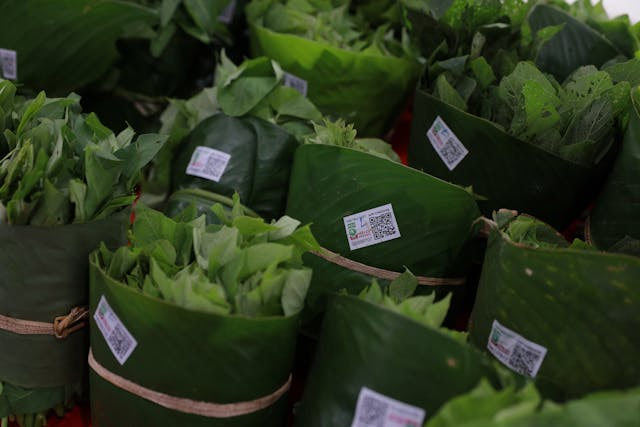
Blockchain-based traceability compresses that timeline to minutes. More importantly, it gives end consumers a direct line to the answer: Is my product affected? A scannable QR code at the point of sale does what no press release can — it answers the question before it becomes a crisis.
For food safety professionals, this is no longer theoretical. It's becoming the expected standard.
For consumers with allergies, celiac disease, or religious dietary requirements, traceability is not a preference. It is a safety need. "Gluten-free" on a label may reflect an ingredient test — not a production-line audit. Halal and kosher certification requires unbroken chain-of-custody proof. These consumers want product-level assurance, and they're increasingly able to tell when they're not getting it.
2. Sustainability Claims Are Under a Microscope
A growing cohort of consumers — and increasingly, institutional investors — are connecting agricultural choices to measurable outcomes: carbon emissions, deforestation, water stress, biodiversity loss.
The question is no longer "Is this organic?" It's:
- Was this beef raised on deforested land?
- What's the actual carbon footprint of this supply chain?
- Did this palm oil cooperative comply with No Deforestation commitments?
These are questions that third-party certification alone cannot answer — because certification is a snapshot, not a continuous record. Traceability is the continuous record.
For supply chain professionals, this represents a critical inflection point. The brands that can answer these questions with data will command premium placement, premium pricing, and preferential access to institutional buyers who now have ESG mandates to meet.
3. The "Know Your Farmer" Shift Is Permanent
COVID-19 did not create consumer interest in supply chain origins — but it made it visceral. When shelves emptied in early 2020, the abstract idea of "supply chain fragility" became lived experience. Consumers who had never thought about where their chicken came from suddenly thought about almost nothing else.
That awareness did not fade when shelves restocked. It settled into a new baseline: a preference for shorter chains, verified origins, and visible accountability.
For industry professionals, this is more than a marketing opportunity. It's a structural argument for traceability infrastructure that can withstand disruption — and prove resilience to buyers and regulators in the same breath.
4. Certification Alone Is No Longer Enough
This one deserves direct acknowledgment, because it affects how we all do business.
Third-party certification was built for an era of less scrutiny. It worked when consumers trusted the seal. Today, that trust is fragile — and with good reason.
| Problem | Real-World Impact |
|---|---|
| Too many competing seals | Dozens of certifications with varying standards; consumers can't differentiate |
| Audit fraud | Documented cases of audits that missed or ignored fraud |
| Cost barriers for small producers | Smallholders meeting high standards excluded from premium markets |
| Dilution | Industrial operations meeting minimum thresholds receive the same label as exemplary small farms |
Consumers are shifting from trust me to show me. Certification says: "We have been audited." Traceability shows: farm GPS coordinates, harvest dates, lab results, photographic evidence, real-time logistics records.
This does not make certification obsolete. It makes traceability the layer that makes certification credible.
5. Regulation Is Catching Up — Fast
Consumer pull is now matched by regulatory push, and for supply chain leaders, the timelines are real.
EU Deforestation Regulation (EUDR): By December 2026, any company placing coffee, cocoa, soy, palm oil, beef, rubber, or wood on the EU market must demonstrate their products are deforestation-free. The documentation requirements effectively mandate end-to-end traceability. Non-compliant suppliers will be locked out of the EU market.
FSMA Section 204 (US): Enhanced traceability requirements for high-risk foods are creating infrastructure demands that mirror what blockchain solutions already provide natively.
France's EGALIM Laws: Mandatory origin disclosure for meat and dairy in foodservice settings. Consumer-facing transparency is legally required, not optional.
The pattern is consistent: traceability is moving from voluntary best practice to regulatory baseline. The businesses investing now are building compliance infrastructure. The ones waiting are building debt.
Why Traditional Systems Keep Failing
The core problem with legacy traceability is structural, not technical.
| Problem | Traditional System | Blockchain Solution |
|---|---|---|
| Data silos | Each actor keeps separate, incompatible records | Shared, immutable ledger accessible to all parties |
| Fraud vulnerability | Centralized records can be altered | Cryptographically sealed — changes are impossible without detection |
| Recall speed | Days or weeks to trace contamination source | Minutes |
| Consumer access | Data locked inside enterprise systems | QR code at point of sale |
| Cost | Expensive audits, manual reconciliation, legal exposure | Automated recording, minimal transaction costs |
The issue is not a lack of data. The food industry generates enormous amounts of data at every node. The issue is that this data is fragmented, unverified, and inaccessible at the moments when it matters most — a recall, a regulatory audit, a retailer review, a consumer scan.
What AgriGuildDAO Actually Delivers
AgriGuildDAO is not another audit overlay. It is decentralized traceability infrastructure — meaning no single actor controls the record, and no single actor can manipulate it.
Here's what that means in practice:
For producers and cooperatives:
- Register farm-level data: GPS, practices, certifications, harvest batches
- Attach your story and evidence to your product permanently
- Access premium markets that require verified sustainability claims
For processors and logistics partners:
- Record every handoff on-chain in real time
- Reduce liability exposure in recall scenarios
- Meet EUDR and FSMA documentation requirements as a byproduct of normal operations
For brands and retailers:
- Offer consumer-facing QR codes that deliver genuine transparency — not a brand marketing page
- Turn regulatory compliance into a marketing asset
- Differentiate with third-party verifiable claims, not self-reported ones
For end consumers:
- Scan once, see everything: farm origin, harvest date, certifications, logistics chain, farmer narrative
- Make purchasing decisions based on evidence, not trust in a label
The protocol does not hold funds, intermediate transactions, or own data. It provides the immutable public record that all parties can point to when trust is challenged.
The Premium Is Real — But Context Matters
Willingness-to-pay data is consistent across multiple studies:
| Claim Type | Average Consumer Premium |
|---|---|
| Organic certification | 10–20% |
| Fair Trade certification | 10–15% |
| Carbon-neutral certified | 10–15% |
| Full blockchain traceability | 5–10% |
| Traceability + compelling producer story | 15–25% |
The data point worth internalizing: traceability combined with narrative commands the highest premium — not certification alone. The data creates credibility; the story creates connection. Neither alone is as powerful as both together.
For supply chain professionals, this is the business case in a single row: an investment in traceability infrastructure pays back not just in compliance cost avoidance, but in demonstrable premium pricing power.
Honest Limitations
A rigorous briefing requires acknowledging what doesn't work yet.
Digital access gaps. Effective on-chain traceability requires producers to have smartphones and connectivity. In remote smallholder contexts, this is still a barrier — though offline-first solutions are maturing rapidly, and AgriGuildDAO's open-source tools are designed to minimize technical overhead.
Garbage in, garbage out. Blockchain verifies that data has not been tampered with after it was recorded. It does not verify that the data was accurate when it was entered. This is where physical audits, satellite verification, and IoT sensors play a complementary role — the record is as trustworthy as the inputs.
Risk of surface-level adoption. A QR code that leads to a generic brand page is worse than nothing — it signals that transparency is being performed, not practiced. Consumers can tell the difference. The competitive advantage comes from genuine verifiability, not the appearance of it.
What This Means for Your Business in the Next 18 Months
The window for early-mover advantage is closing. Within 18 months:
- EUDR enforcement begins for large operators (December 2026)
- Major retailers in the UK, EU, and US are integrating traceability requirements into supplier scorecards
- Category buyers increasingly require verified sustainability data as a purchasing condition — not a bonus
The professionals leading this transition are not waiting for industry consensus. They are building the infrastructure now and using regulatory timelines as the forcing function to align supply chain partners.
The practical path:
If you are a cooperative or producer: Start with your highest-value crop. Document your practices. Use AgriGuildDAO's tools — they are open-source, and transaction costs on Solana are fractions of a cent.
If you are a brand or retailer: Require traceability from your top-tier suppliers as a 2026 purchasing condition. Pilot consumer-facing QR codes on one SKU. Measure the premium and the engagement — then scale.
If you are a supply chain technology provider: Consider interoperability with decentralized protocols now, before your clients' buyers mandate it and you're rebuilding in a hurry.
The Transparent Supply Chain Is Not Coming. It's Here.
Five years ago, "organic" was a differentiator. Today, in most developed markets, it is an entry requirement. The same compression is happening with traceability — faster, because the regulatory calendar is fixed.
The professionals who treat traceability as a compliance cost will spend the next decade managing that cost. The ones who treat it as infrastructure — the foundation for every premium claim, every sustainability narrative, every retailer conversation — will build something durable.
AgriGuildDAO exists to make that infrastructure accessible to the entire chain: smallholder cooperatives, mid-market processors, and global brands alike.
If you are ready to move from compliance conversations to competitive advantage, we'd like to talk.
Request a Demo → Explore the Protocol →
References
- Food Industry Association. (2024). Consumer Trends in Food Transparency.
- IBM. (2022). Blockchain for Food Safety and Traceability.
- European Commission. (2023). EU Deforestation Regulation Implementation Timeline.
- FDA. (2024). FSMA Section 204: Enhanced Traceability.
- Nielsen. (2021). The Rise of the Conscious Consumer.
- Label Insight. (2018). The Transparency Imperative.