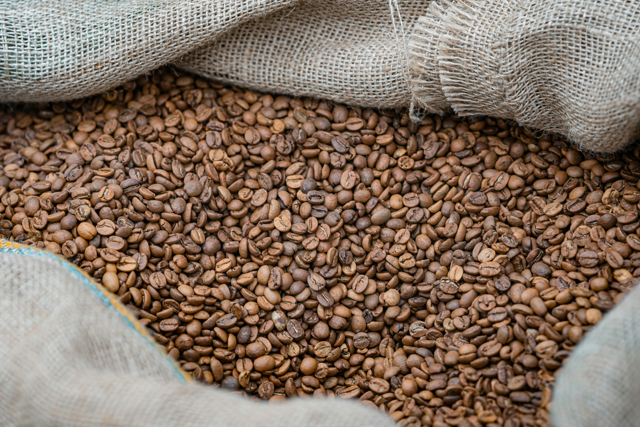
GUATEMALA CITY — On a misty mountainside in Huehuetenango, a coffee farmer named Carlos Mendoza picks ripe cherries from his trees, just as his family has for generations. But this year, something is different: Each bag of his beans now carries a small square code, a digital key that unlocks the story of his labor, his land, and the journey his coffee takes to reach consumers thousands of miles away.
For decades, the global coffee supply chain has operated in the shadows, a labyrinth of middlemen, unclear pricing, and unverified claims. Farmers like Mr. Mendoza often receive only a fraction of the retail price, while buyers and drinkers know little about the origins—or the ethics—of their daily brew.
Now, a quiet revolution is underway. Using QR codes and blockchain technology, a growing movement is bringing unprecedented transparency to the coffee trade, empowering farmers, informing consumers, and challenging an industry built on opacity.
A System Built on Secrecy
Coffee is one of the world’s most traded commodities, supporting the livelihoods of some 25 million farming families. Yet the path from farm to cup is notoriously convoluted, involving a chain of intermediaries that obscures critical information at every turn.
The Current Reality: Pros and Pitfalls
The existing system has undeniable strengths. It moves vast quantities of coffee across continents, supports millions of jobs, and delivers a product that fuels economies and cultures worldwide. But its flaws are equally stark:
- Information Blackout: Once coffee leaves the farm, details about its origin, quality, and handling often vanish. A bag labeled “single-origin” may contain beans from multiple farms, or even countries.
- Price Disparities: Farmers typically receive less than 10 percent of the retail price, while traders, roasters, and retailers capture the bulk of the profits.
- Quality Uncertainty: Buyers—from large corporations to local cafés—struggle to verify claims about organic certification, fair labor practices, or freshness.
- Consumer Disconnection: Drinkers are left with little more than marketing labels, unable to trace their coffee’s journey or assess its true value.
“You work hard all year, but in the end, you don’t know if your coffee is even sold as yours,” said Mr. Mendoza, who has farmed coffee for 20 years. “The system is designed so we never see the final price.”
The Human Cost
The consequences extend beyond economics. Without direct access to buyers, farmers have little leverage to negotiate better prices or invest in sustainable practices. Meanwhile, consumers increasingly demand transparency, yet the industry has been slow to adapt.
“People want to know where their food comes from,” said Ana Lucia Solís, a supply chain analyst at the International Coffee Organization. “But in coffee, that information has been nearly impossible to track.”
A Digital Solution for an Analog Problem
Enter the QR code, a technology once dismissed as a gimmick now being harnessed to transform global agriculture. By assigning a unique, scannable code to each batch of coffee, producers can link their beans to a digital record—one that follows the product from harvest to sale.
How It Works
- At the Farm: Producers register their coffee’s origin, harvest date, processing method, and certifications in a digital ledger.
- In Transit: As the coffee moves through exporters, importers, and roasters, each step is recorded and updated in real time.
- On the Shelf: Consumers scan the code with a smartphone to access the full history: the farm’s location, the farmer’s name, even photos and videos of the harvest.
The Blockchain Advantage
When paired with blockchain, QR codes become even more powerful. The technology creates an immutable record, meaning data cannot be altered or erased. Smart contracts automate payments, ensuring farmers are paid promptly upon delivery, and buyers can verify claims with a tap.
“Blockchain doesn’t just add transparency—it enforces accountability,” Mr. Ritter said. “If a bag is labeled ‘fair trade,’ the proof is right there in the code.”
A Test Case in Guatemala
Mr. Mendoza is one of hundreds of farmers who sold a portion of his crop directly to a specialty roaster, bypassing traditional traders. The result? He earned 30 percent more per pound, while the roaster gained a verifiable story to share with customers.
“Before, I had to trust that the buyer would pay what they promised,” Mr. Mendoza said. “Now, the contract is automatic. The money arrives when the coffee does.”
For consumers, the change is equally profound. At a café in Williamsburg, patrons can scan a code on their coffee bag to watch a video of Mr. Mendoza’s farm, see his certification documents, and even send him a message.
“It turns coffee from a commodity into a connection,” said Emma Chen, the café’s owner. “People don’t just buy a product—they buy a relationship.”
Beyond Coffee: A Model for Global Agriculture
The implications stretch far beyond coffee. Pilots are underway for cocoa, tea, and fresh produce, with advocates arguing that traceability could become the norm across food systems.
“This isn’t just about coffee,” Ms. Solís said. “It’s about rethinking how we value the people and places behind what we consume.”
Yet challenges remain. Not all farmers have access to the technology, and some industry players resist change. But as climate change and ethical consumerism reshape markets, the pressure for transparency is growing.
The Road Ahead
For now, QR-coded coffee remains a niche product, available primarily through specialty retailers. But proponents believe it is only a matter of time before the practice spreads.
“Five years ago, no one thought they’d scan a code to pay for lunch,” Mr. Ritter said. “Now, we do it without thinking. The same will happen with our food.”
Back in Huehuetenango, Mr. Mendoza is already seeing the difference. “Before, I was invisible,” he said. “Now, when someone drinks my coffee, they know my name.”
In an industry built on anonymity, that may be the most radical change of all.
FAQ: Understanding the Shift
How do QR codes ensure fairness?
By providing a direct, verifiable link between farmers and buyers, QR codes reduce reliance on intermediaries, allowing producers to capture more of the retail price.
Is the technology accessible to small farmers?
Yes. QR codes are inexpensive to generate, and there is support to help farmers adopt the system.
Can this scale globally?
Early adopters are proving it can. As demand for transparency grows, experts predict QR traceability will become standard—first in specialty markets, then across the industry.
The Bottom Line
The next time you take a sip of coffee, consider this: The beans in your cup may have traveled through half a dozen countries, changed hands a dozen times, and passed through a system designed to hide as much as it reveals. But with a simple scan, that system is starting to change—one code at a time.