Blockchain technology is rapidly transforming the global agriculture industry by introducing transparency, security, and efficiency into supply chains.
As demand for food traceability and compliance grows, blockchain in agriculture is becoming a foundational layer for modern agricultural trade.
What Is Blockchain in Agriculture?
Blockchain in agriculture refers to using distributed ledger technology to record and track agricultural data across the supply chain.
Each transaction or data point—such as harvesting, processing, or shipping—is recorded in a tamper-proof system that cannot be altered.
Key characteristics:
- Decentralized record-keeping
- Immutable transaction history
- Transparent data access
- Automated execution via smart contracts
Why Agriculture Needs Blockchain
Traditional agricultural systems suffer from:
- Lack of transparency
- Fraud and product mislabeling
- Inefficient paperwork
- Payment delays
These issues create risk for both farmers and buyers, especially in international trade.
Blockchain solves these by creating a single source of truth shared across all participants.
How Blockchain Enables Food Traceability
One of the most important applications is food traceability.
With blockchain:
- Every product batch gets a unique digital record
- Data is updated at each stage of the supply chain
- Buyers can verify origin instantly
Each step is recorded and verifiable.
Smart Contracts in Agricultural Supply Chains
Smart contracts are self-executing agreements stored on the blockchain.
They automatically trigger actions when conditions are met.
Example use case:
- Buyer sends payment → funds locked in escrow
- Shipment delivered and verified
- Smart contract releases payment to farmer
This reduces:
- Payment delays
- Disputes
- Need for intermediaries
Benefits of Blockchain for Farmers and Buyers
For farmers:
- Faster payments
- Access to global markets
- Proof of product authenticity
For buyers:
- Reduced fraud risk
- Verified product origin
- Transparent transaction history
Integration with AI and Modern Technologies
Blockchain becomes even more powerful when combined with AI and data analytics:
- AI detects anomalies in supply chains
- Predictive analytics improve logistics
- Real-time monitoring ensures quality control
Together, these technologies form the backbone of modern agriculture supply chain technology.
Real-World Applications
Blockchain is already being used for:
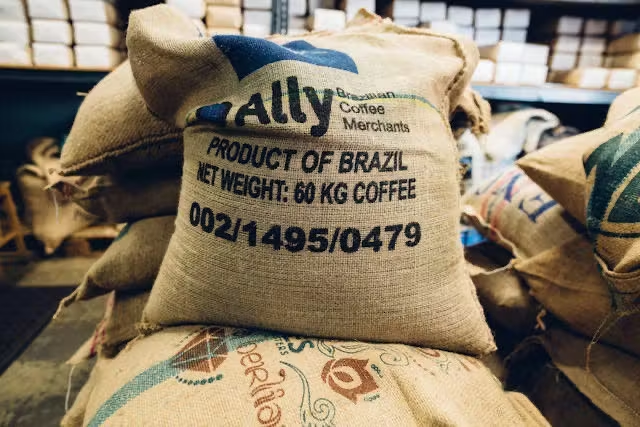
- Coffee and cocoa traceability
- Organic certification verification
- Export compliance tracking
- Supply chain auditing
These use cases are growing rapidly as global demand for transparency increases.
The Role of AgriGuildDAO
AgriGuildDAO brings blockchain into real-world agricultural trade through:
- Decentralized product listings
- Smart contract escrow systems
- Secure global transactions
- Low-cost blockchain infrastructure
FAQ
What is blockchain in agriculture?
Blockchain in agriculture is the use of distributed ledger technology to track and verify agricultural products and transactions across the supply chain.
How does blockchain improve food traceability?
It creates a tamper-proof record of every step in the supply chain, allowing instant verification of product origin and handling.
Is blockchain expensive for farmers?
Modern platforms are making blockchain low-cost and accessible, especially through systems that abstract the technical complexity.